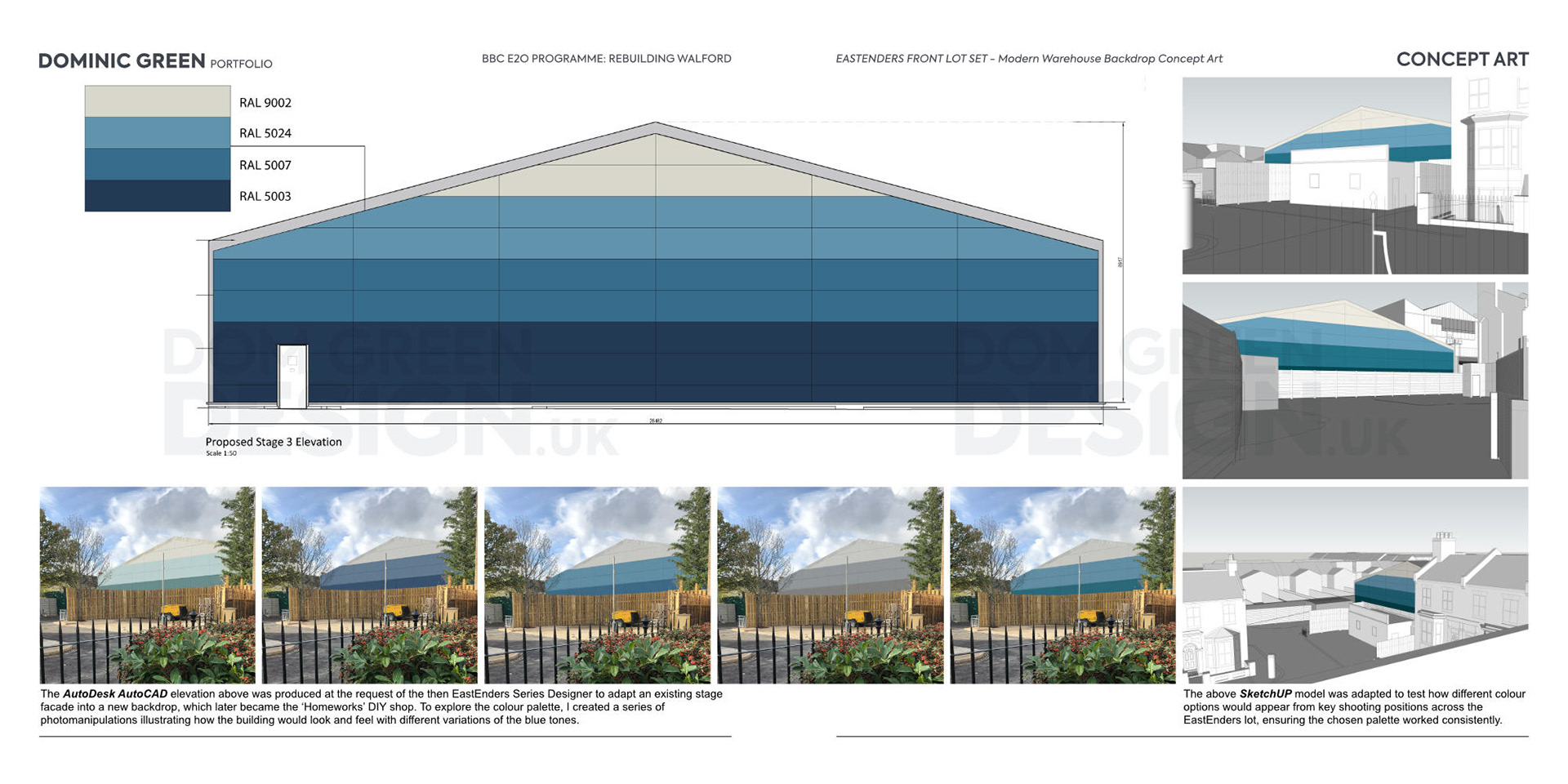
The AutoDesk AutoCAD elevation above was produced at the request of the then EastEnders Series Designer to adapt an existing stage facade into a new backdrop, which later became the ‘Homeworks’ DIY shop. To explore the colour palette, I created a series of photomanipulations illustrating how the building would look and feel with different variations of the blue tones.
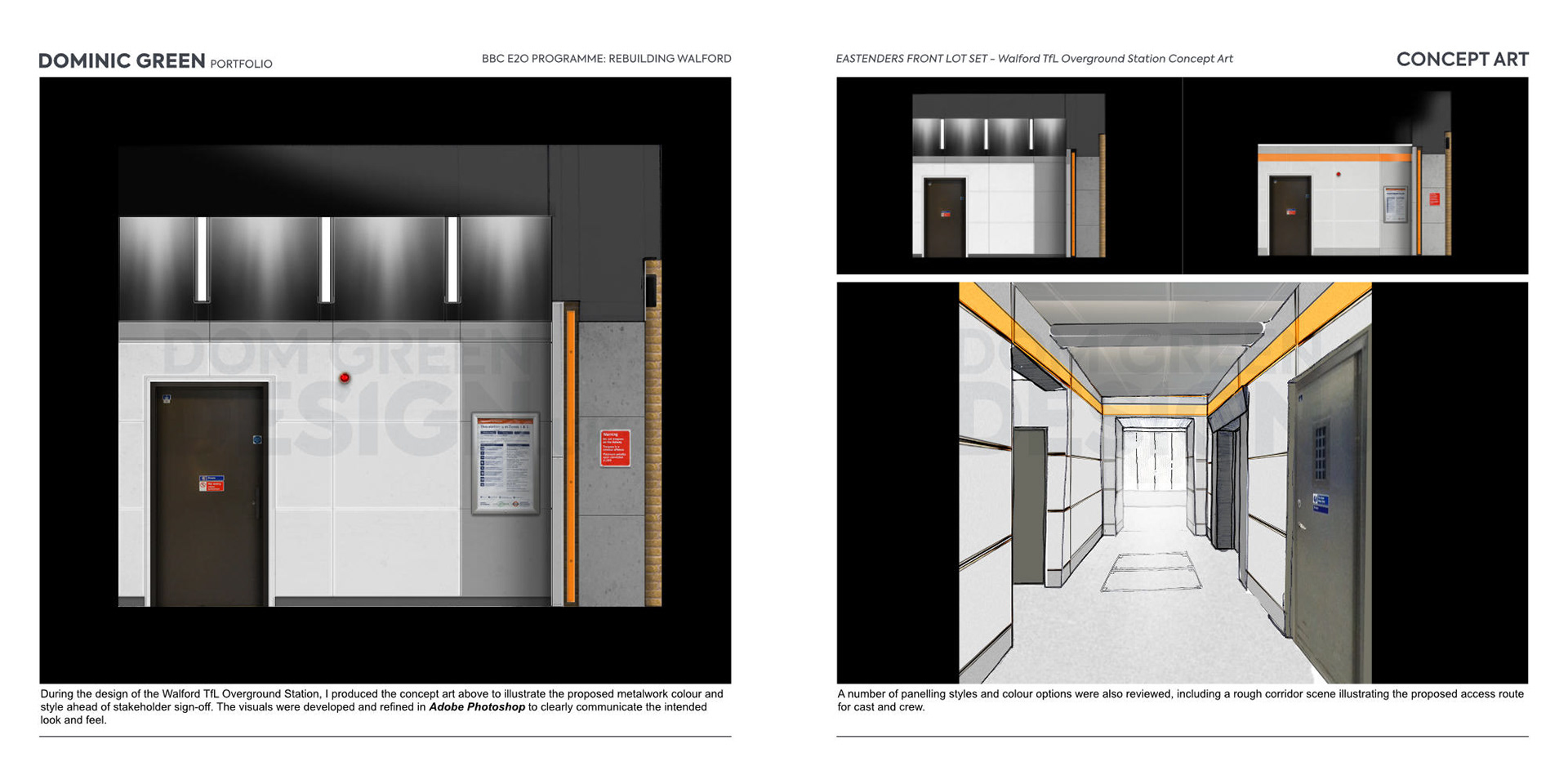
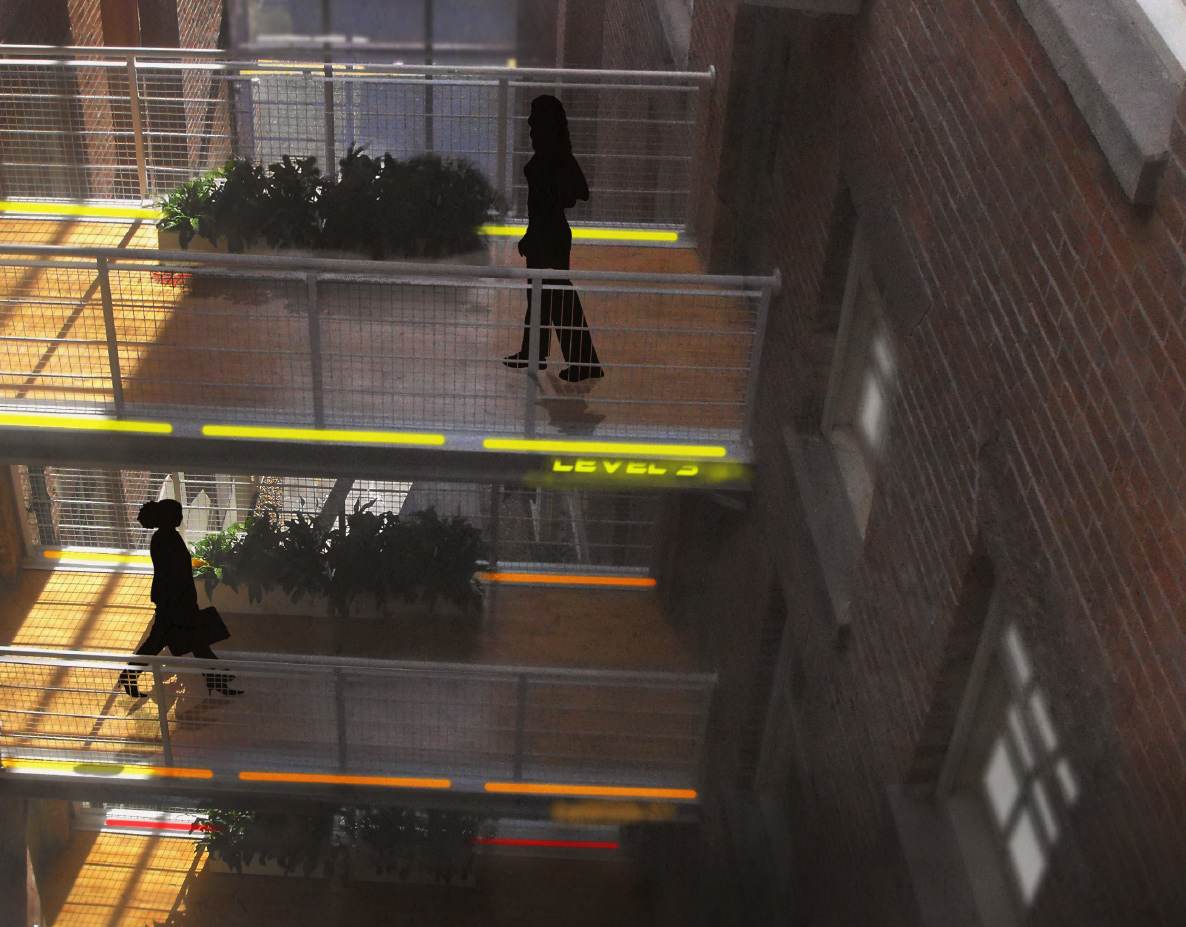
During the design of the Walford TfL Overground Station, I produced the concept art above to illustrate the proposed metalwork colour and style ahead of stakeholder sign‑off. The visuals were developed and refined in Adobe Photoshop to clearly communicate the intended look and feel.
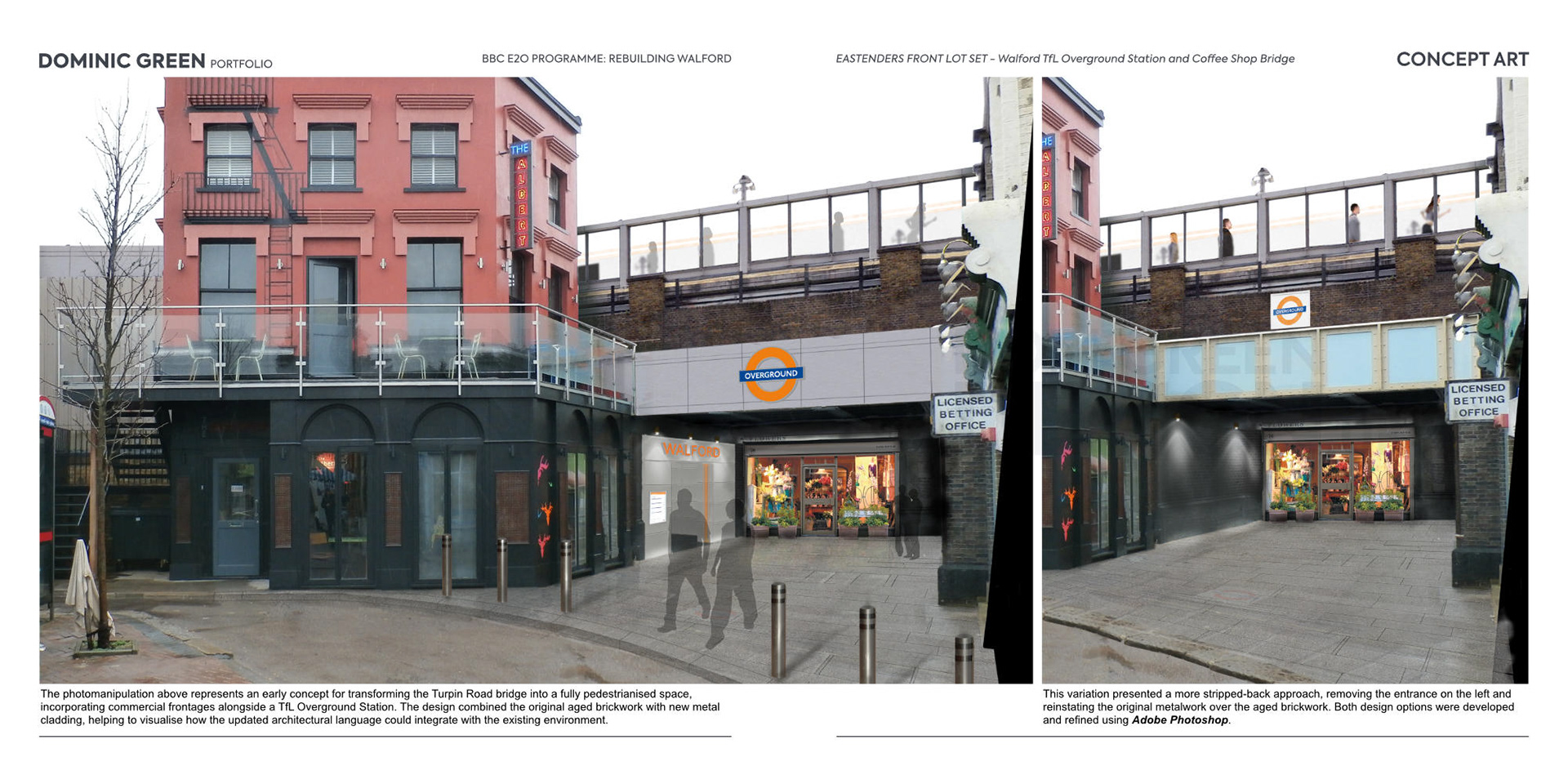
The photomanipulation above represents an early concept for transforming the Turpin Road bridge into a fully pedestrianised space, incorporating commercial frontages alongside a TfL Overground Station. The design combined the original aged brickwork with new metal cladding, helping to visualise how the updated architectural language could integrate with the existing environment.
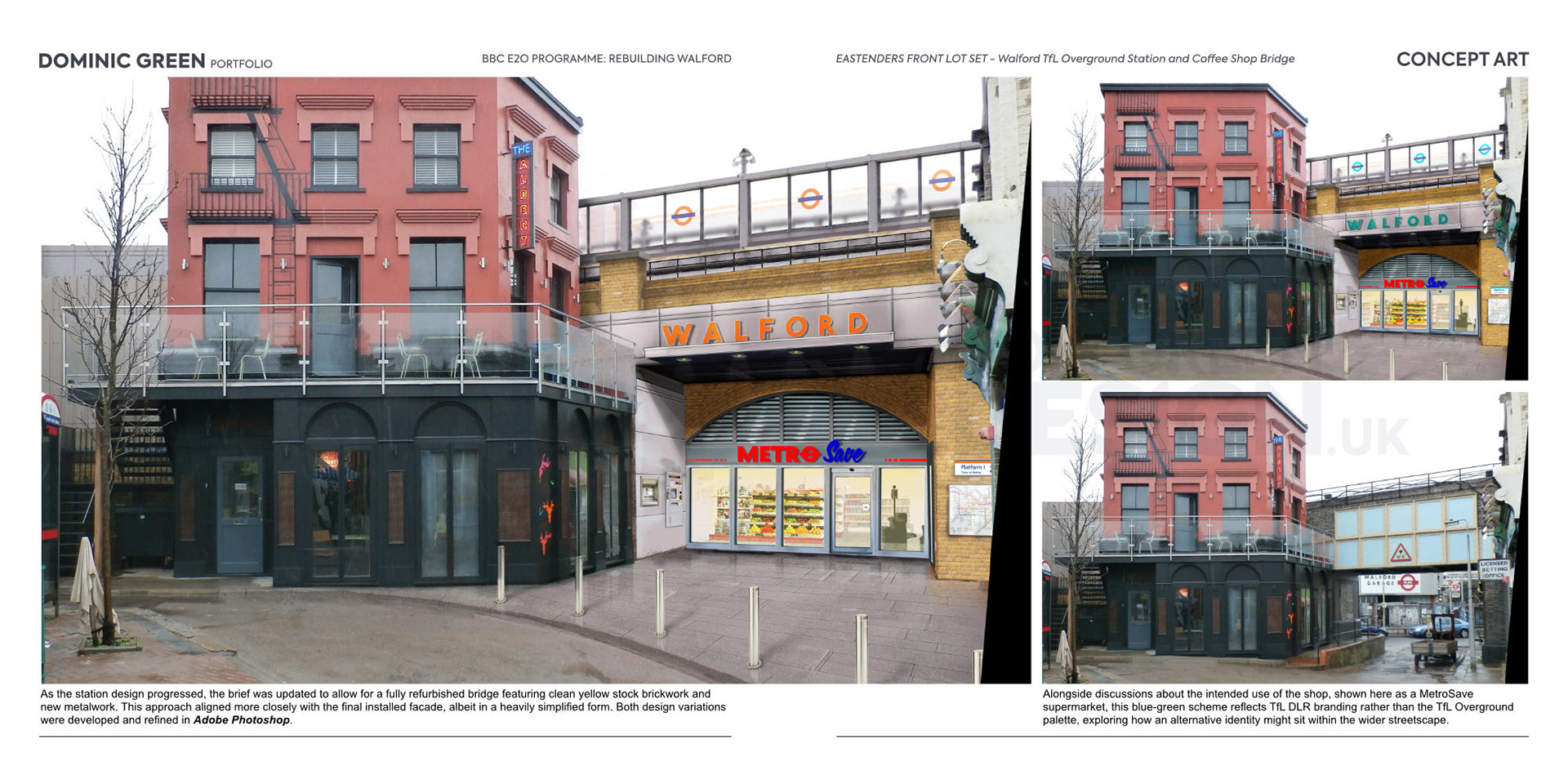
As the station design progressed, the brief was updated to allow for a fully refurbished bridge featuring clean yellow stock brickwork and new metalwork. This approach aligned more closely with the final installed facade, albeit in a heavily simplified form. Both design variations were developed and refined in Adobe Photoshop.
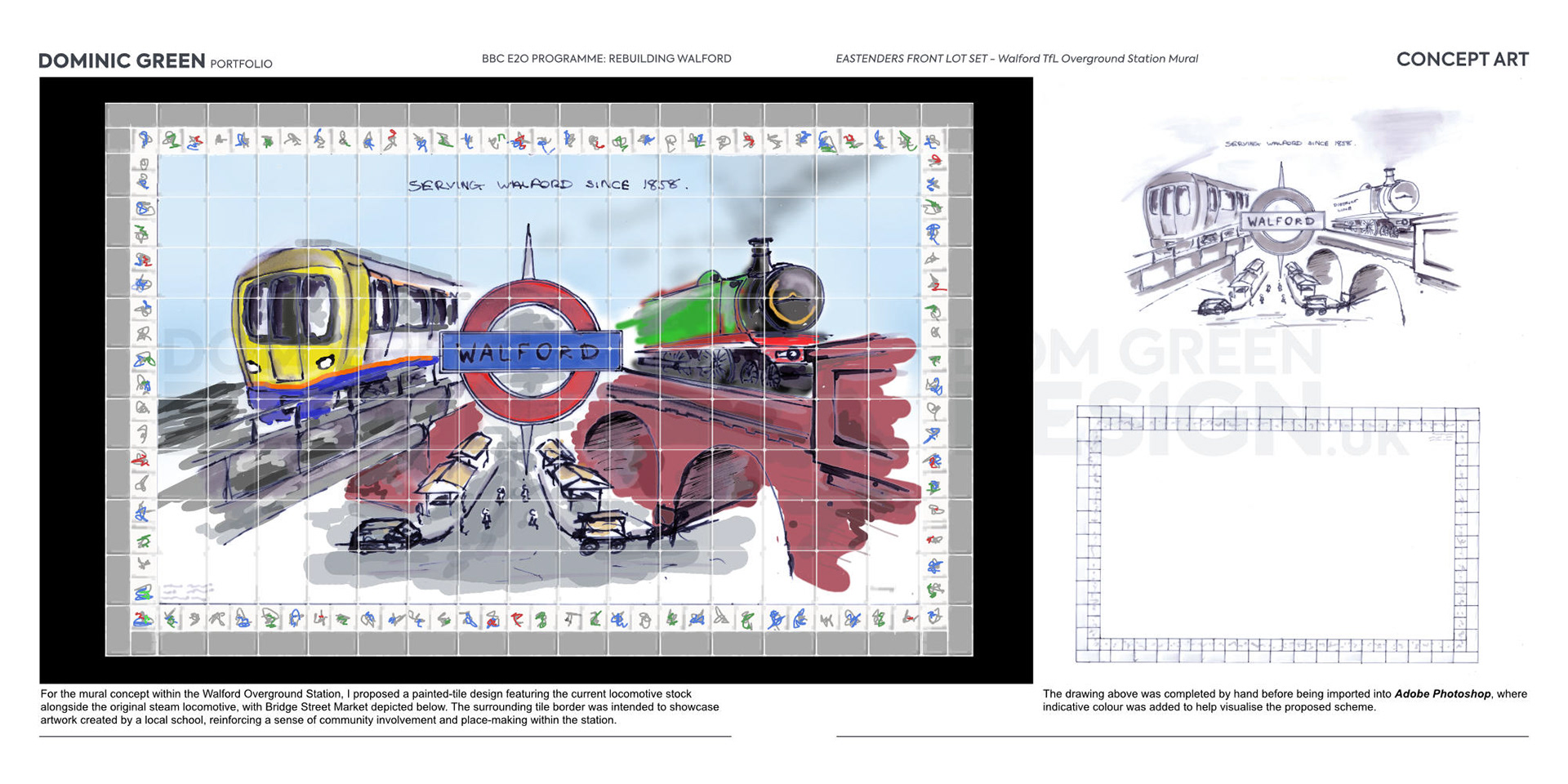
For the mural concept within the Walford Overground Station, I proposed a painted‑tile design featuring the current locomotive stock alongside the original steam locomotive, with Bridge Street Market depicted below. The surrounding tile border was intended to showcase artwork created by a local school, reinforcing a sense of community involvement and place‑making within the station.
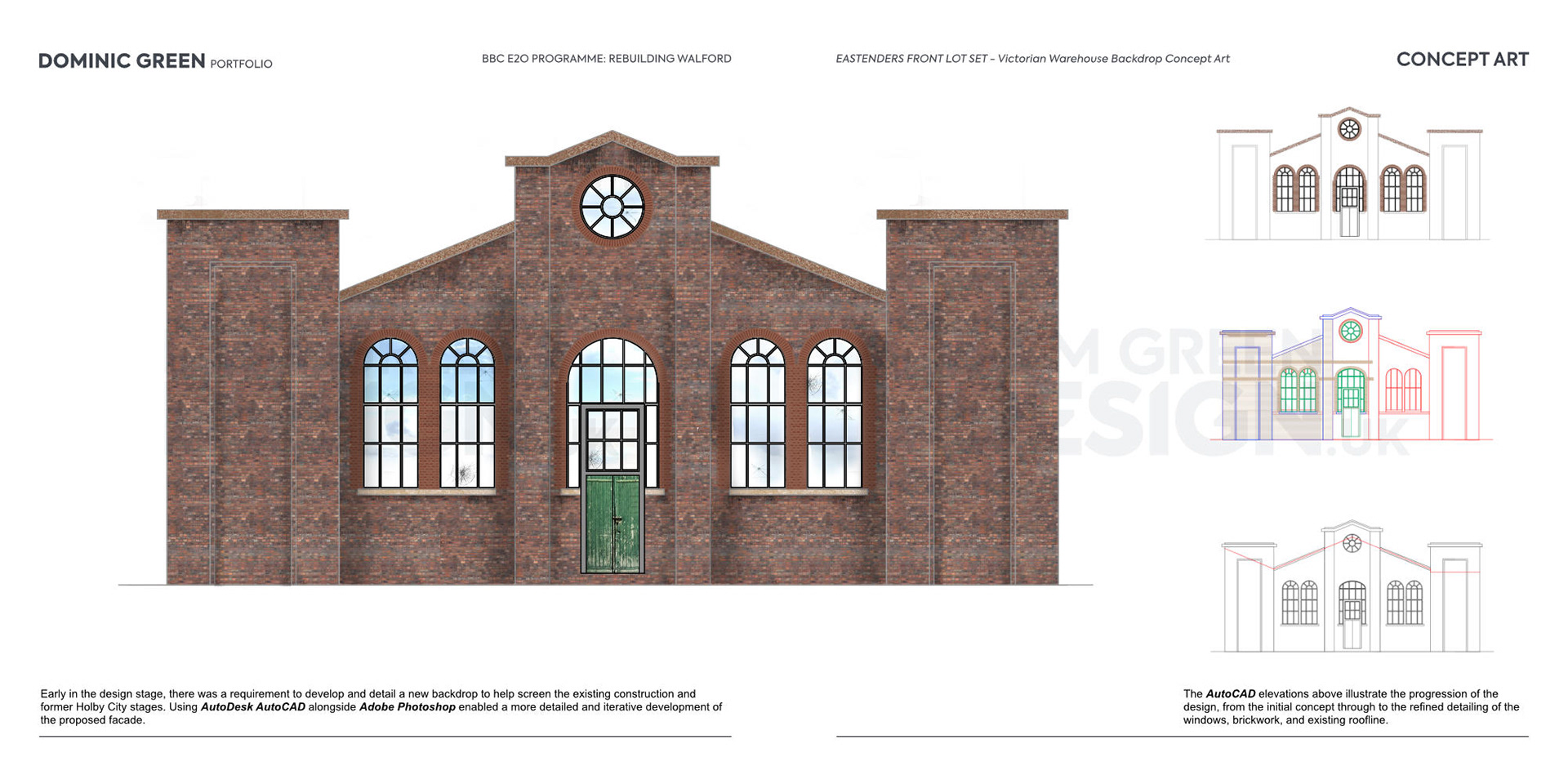
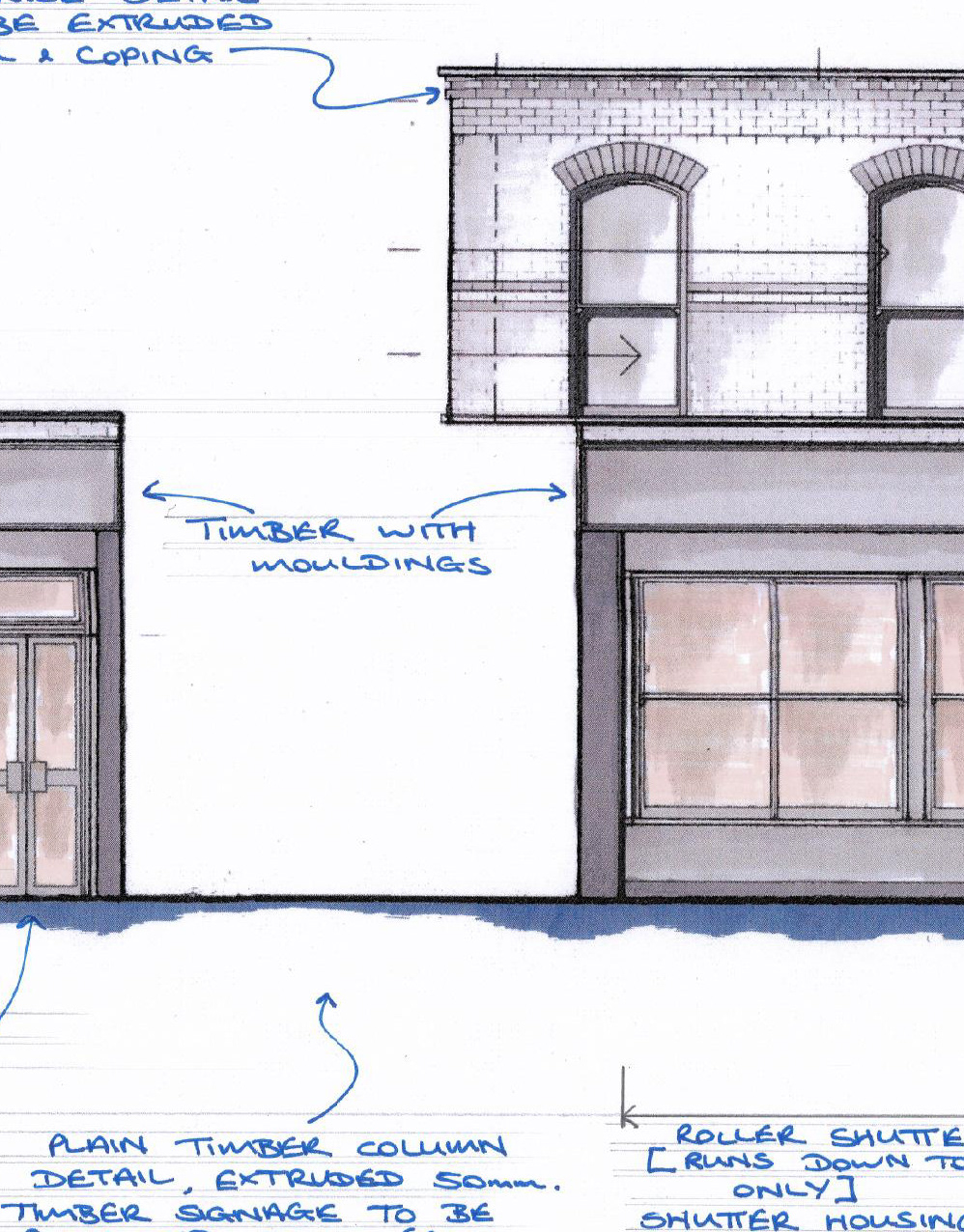
Early in the design stage, there was a requirement to develop and detail a new backdrop to help screen the existing construction and former Holby City stages. Using AutoDesk AutoCAD alongside Adobe Photoshop enabled a more detailed and iterative development of the proposed facade.
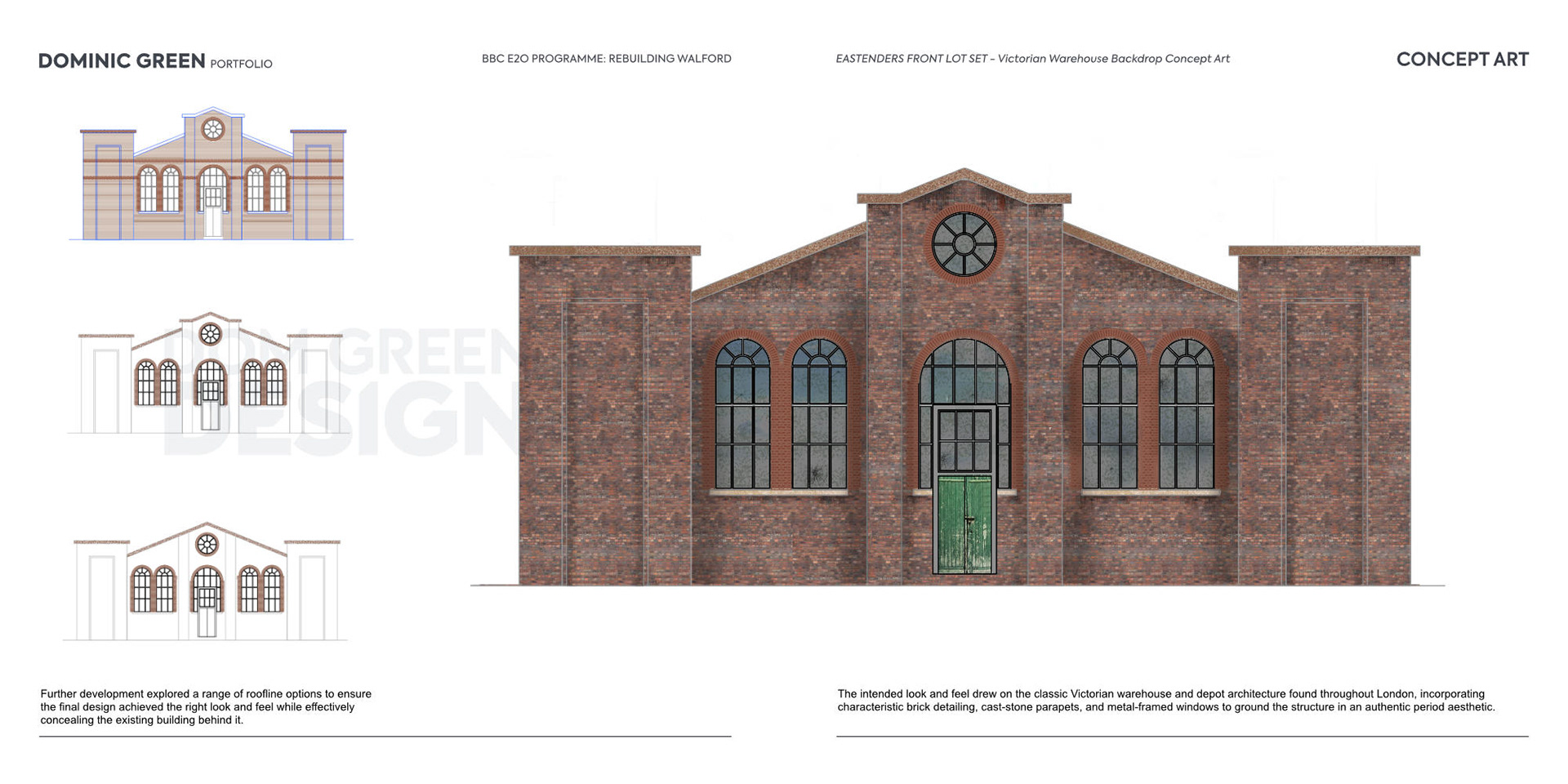
The intended look and feel drew on the classic Victorian warehouse and depot architecture found throughout London, incorporating characteristic brick detailing, cast‑stone parapets, and metal‑framed windows to ground the structure in an authentic period aesthetic.