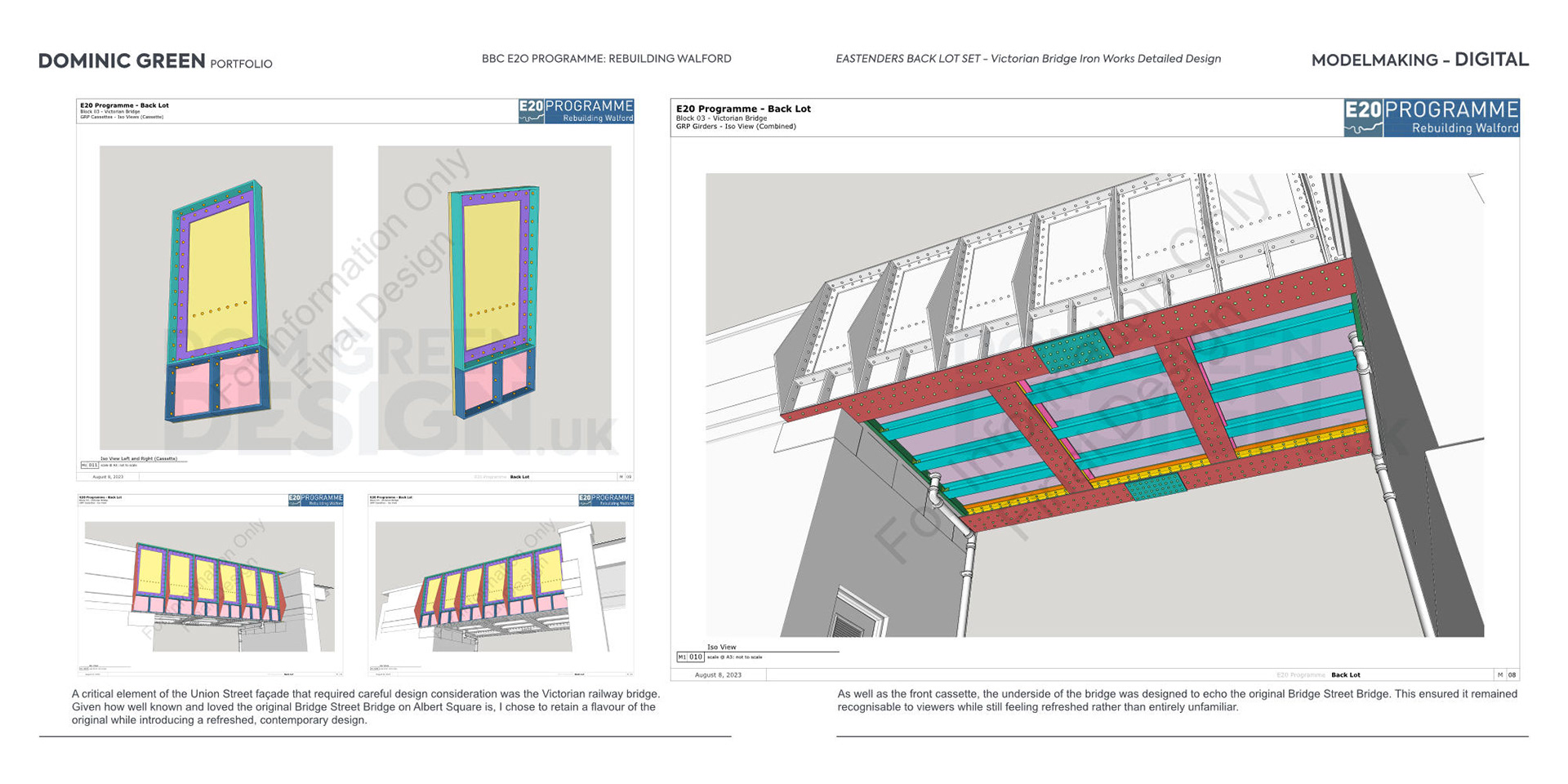
A critical element of the Union Street façade that required careful design consideration was the Victorian railway bridge. Given how well known and loved the original Bridge Street Bridge on Albert Square is, I chose to retain a flavour of the original while introducing a refreshed, contemporary design.
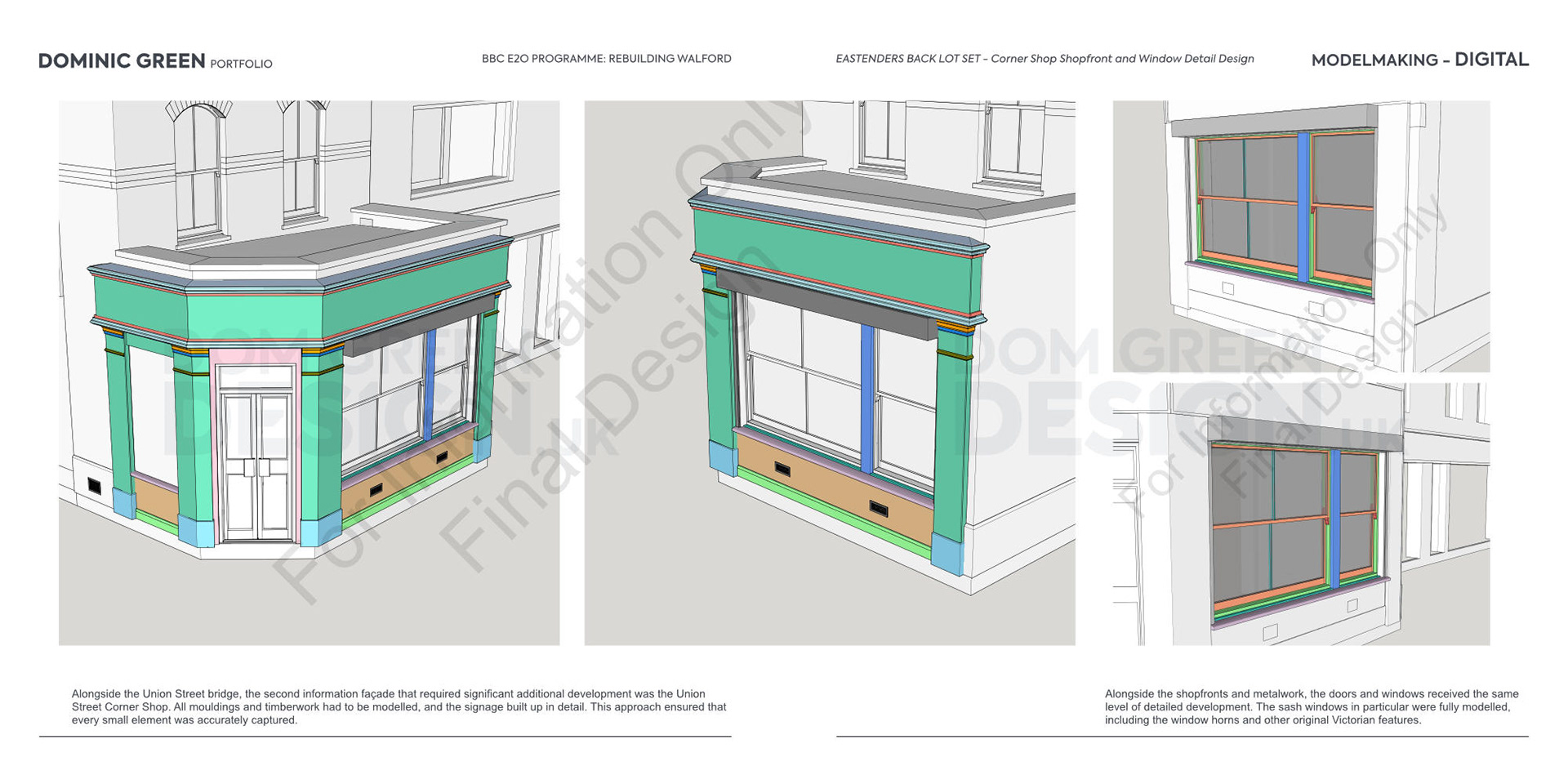
Alongside the Union Street bridge, the second information façade that required significant additional development was the Union Street Corner Shop. All mouldings and timberwork had to be modelled, and the signage built up in detail. This approach ensured that every small element was accurately captured.
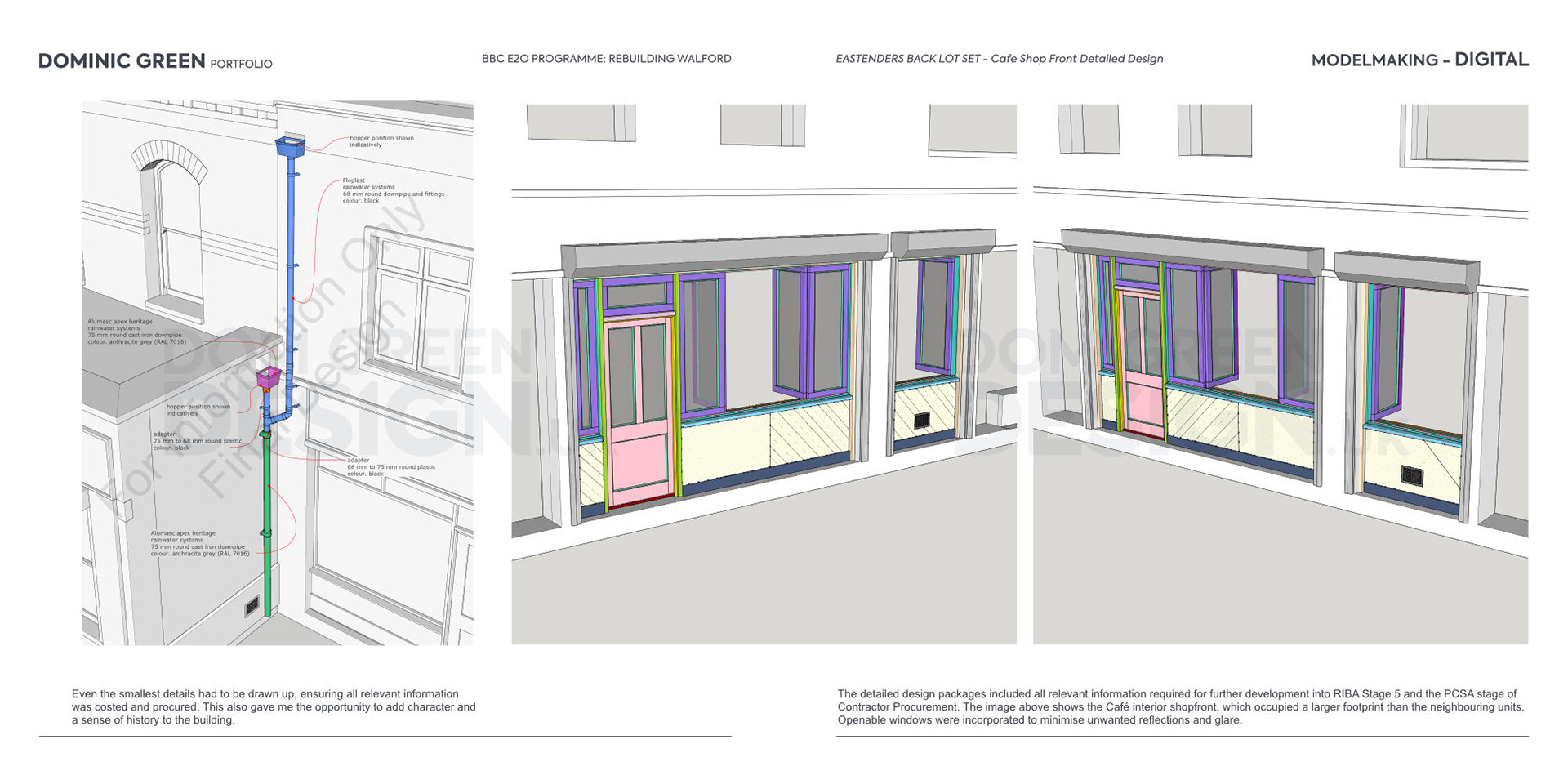
The detailed design packages included all relevant information required for further development into RIBA Stage 5 and the PCSO stage of Contractor Procurement. The image above shows the Café interior shopfront, which occupied a larger footprint than the neighbouring units. Openable windows were incorporated to minimise unwanted reflections and glare.
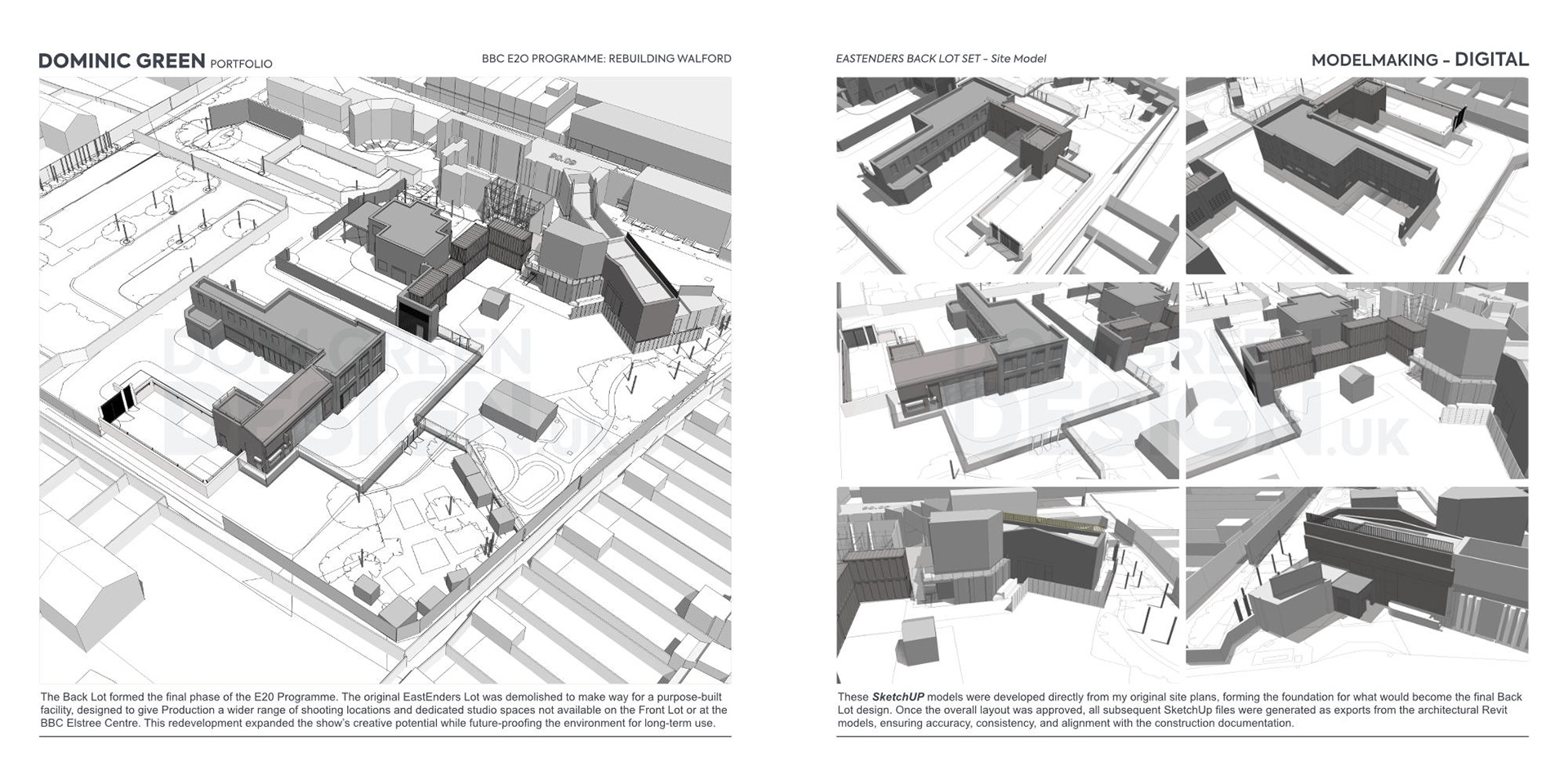
The Back Lot formed the final phase of the E20 Programme. The original EastEnders Lot was demolished to make way for a purpose‑built facility, designed to give Production a wider range of shooting locations and dedicated studio spaces not available on the Front Lot or at the BBC Elstree Centre. This redevelopment expanded the show’s creative potential while future‑proofing the environment for long‑term use.
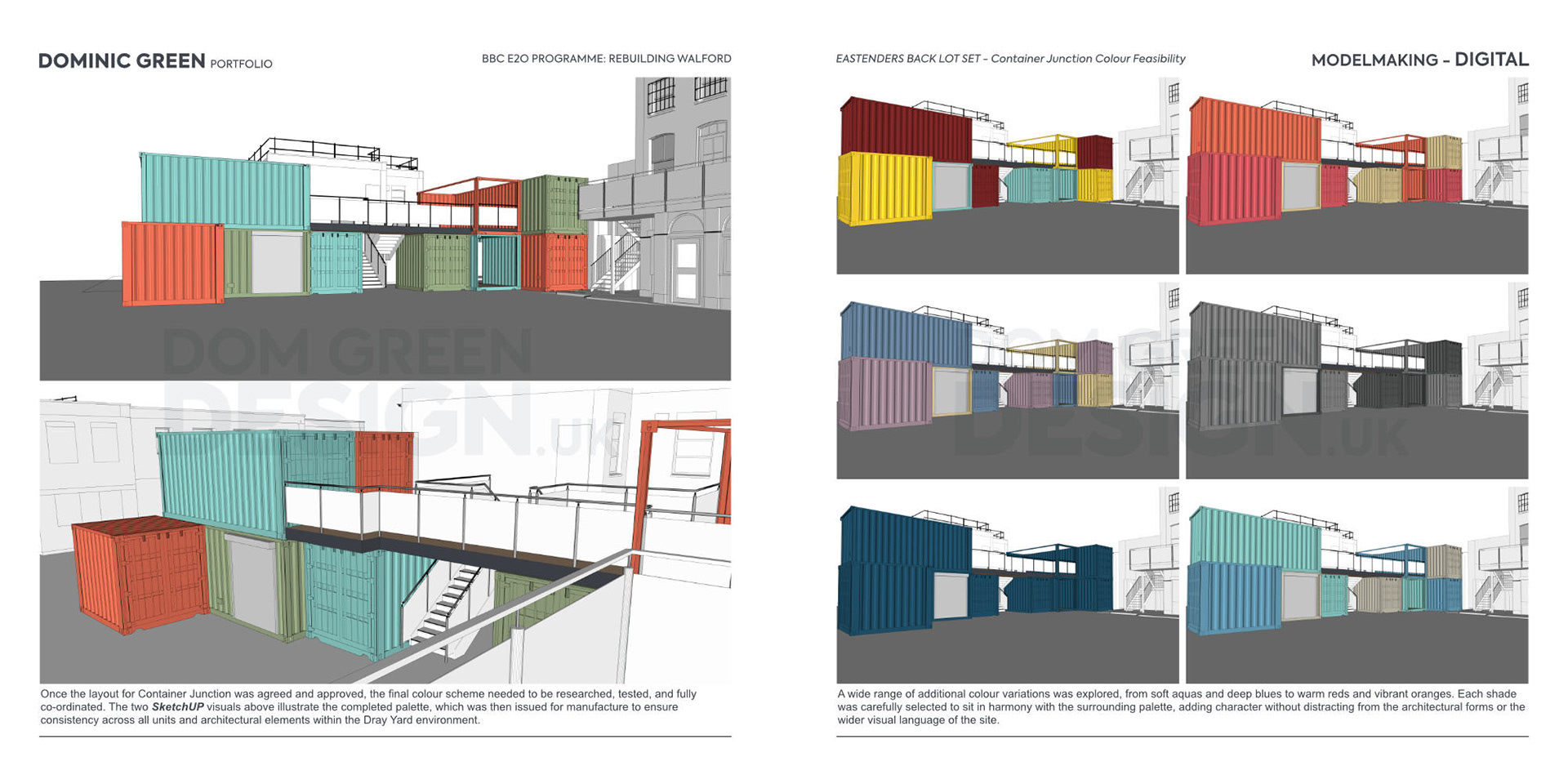
Once the layout for Container Junction was agreed and approved, the final colour scheme needed to be researched, tested, and fully co‑ordinated. The two SketchUP visuals above illustrate the completed palette, which was then issued for manufacture to ensure consistency across all units and architectural elements within the Dray Yard environment.
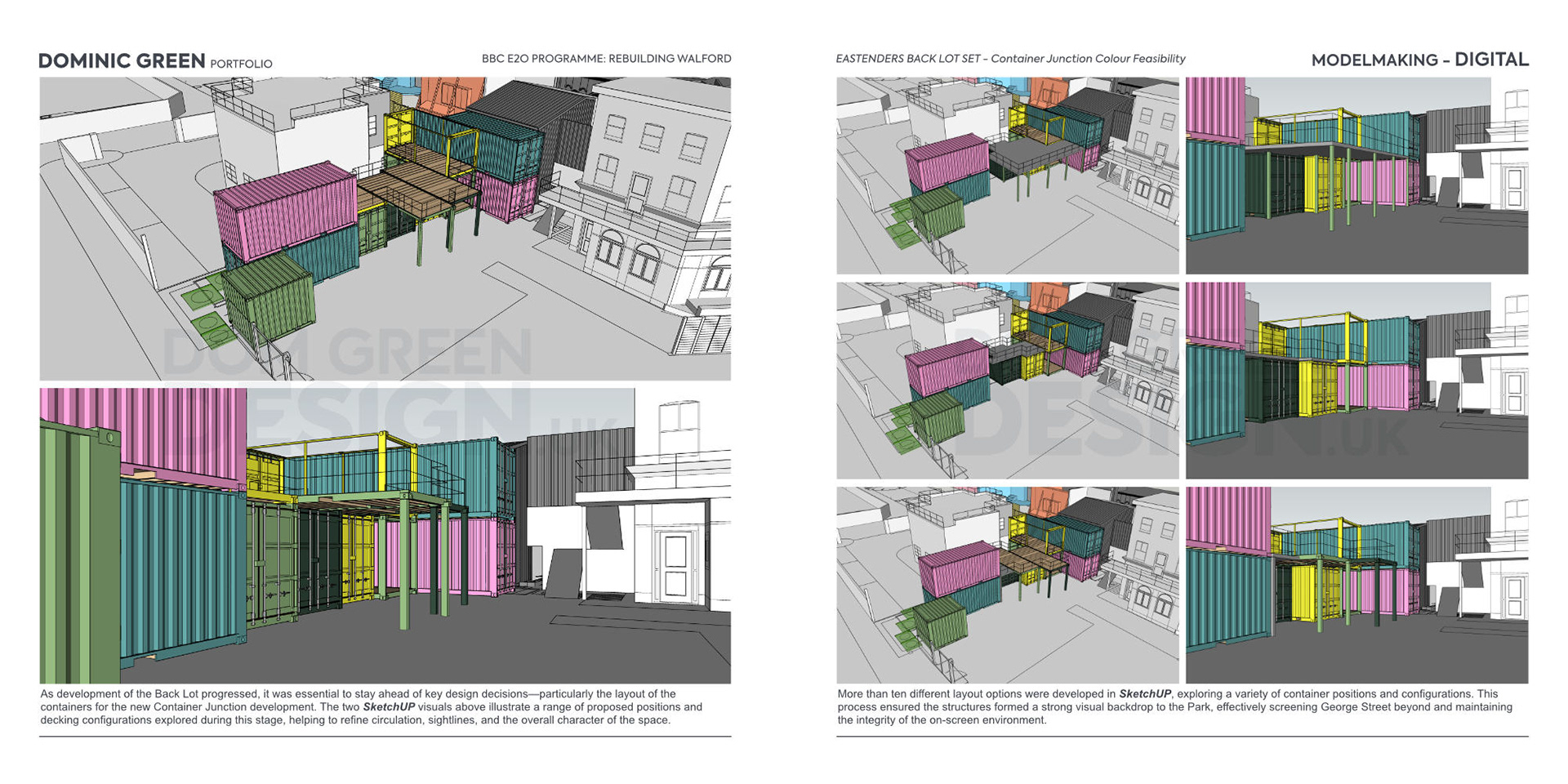
As development of the Back Lot progressed, it was essential to stay ahead of key design decisions—particularly the layout of the containers for the new Container Junction development. The two SketchUP visuals above illustrate a range of proposed positions and decking configurations explored during this stage, helping to refine circulation, sightlines, and the overall character of the space.
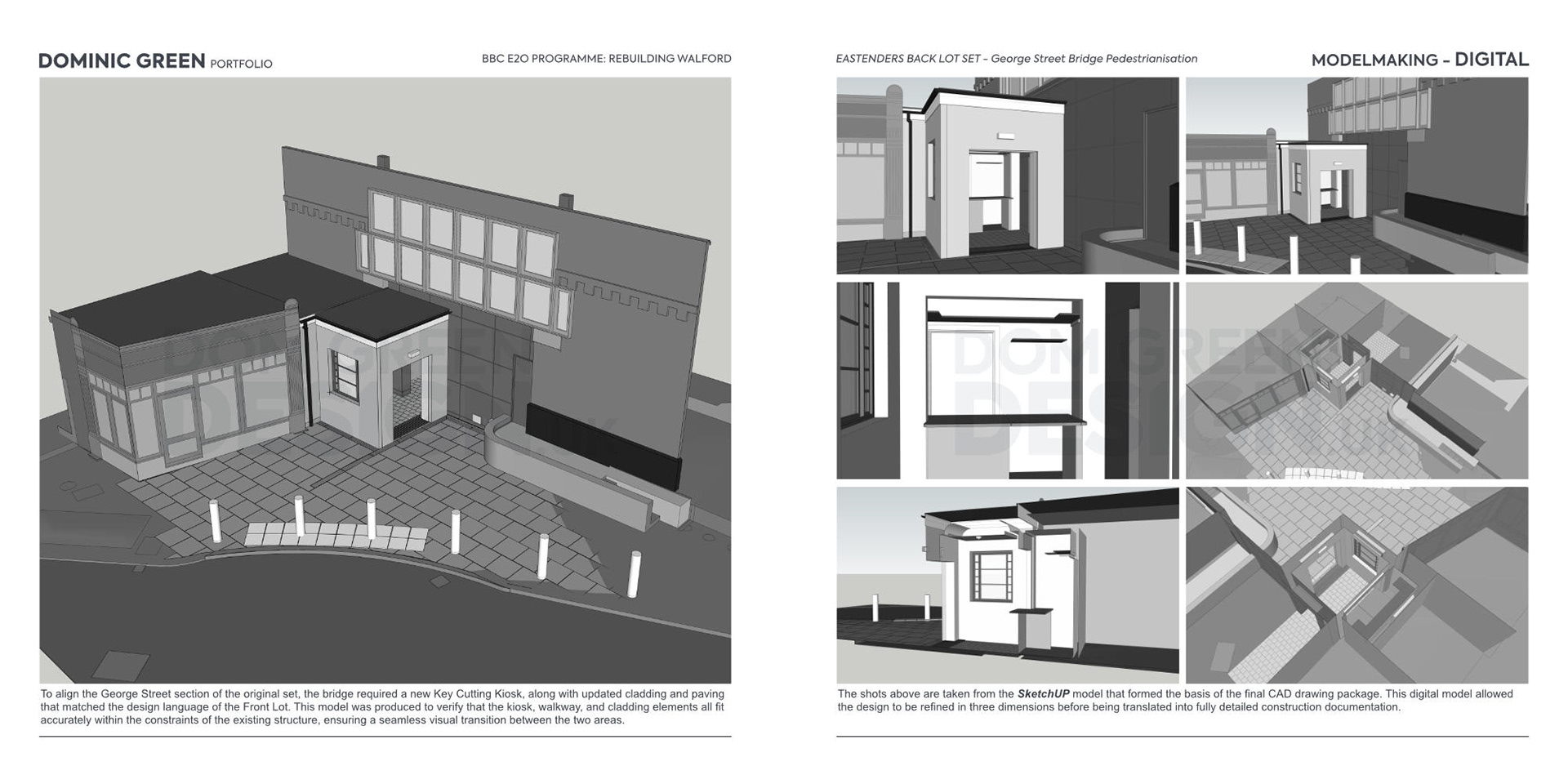
To align the George Street section of the original set, the bridge required a new Key Cutting Kiosk, along with updated cladding and paving that matched the design language of the Front Lot. This model was produced to verify that the kiosk, walkway, and cladding elements all fit accurately within the constraints of the existing structure, ensuring a seamless visual transition between the two areas.
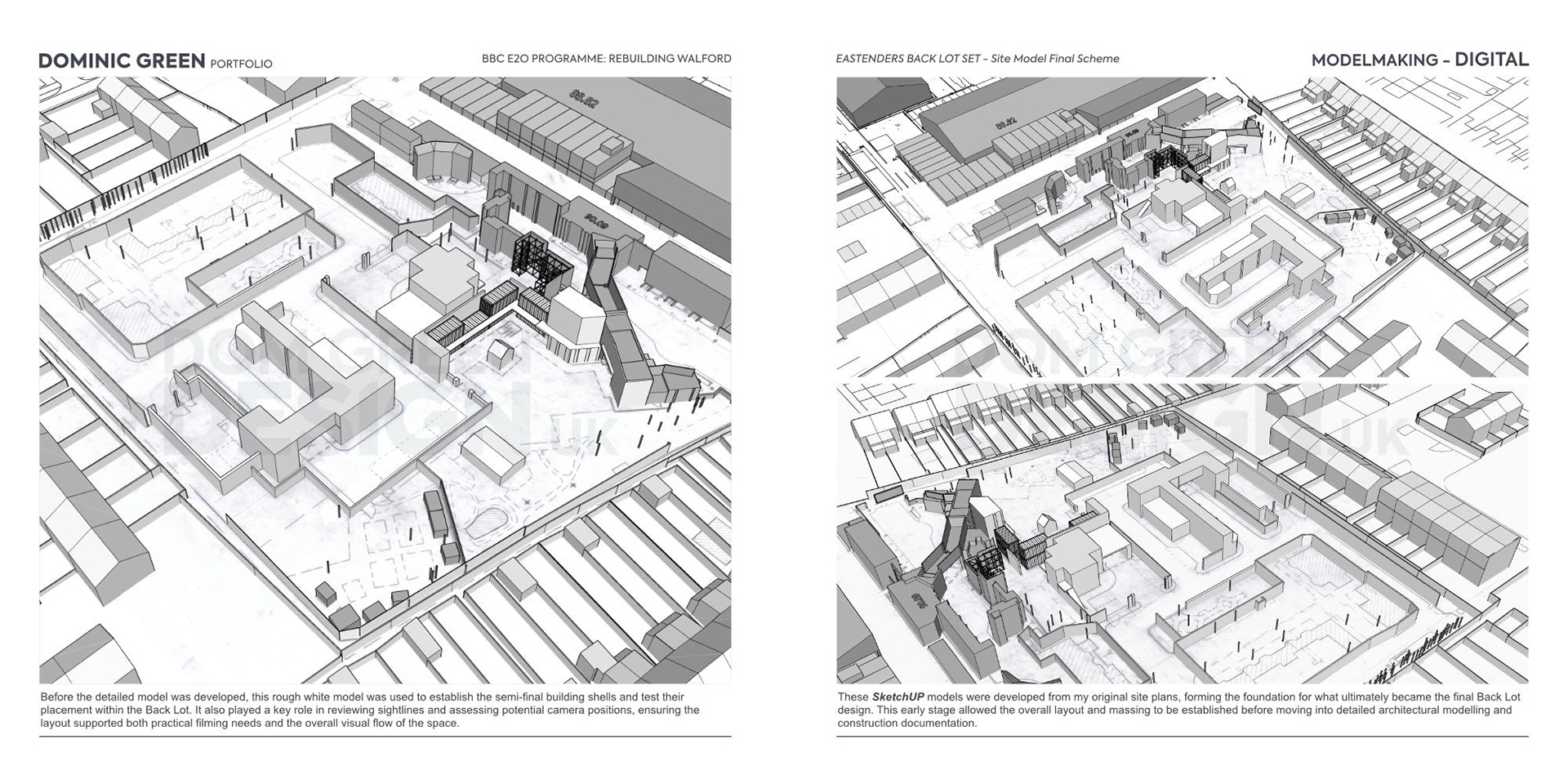
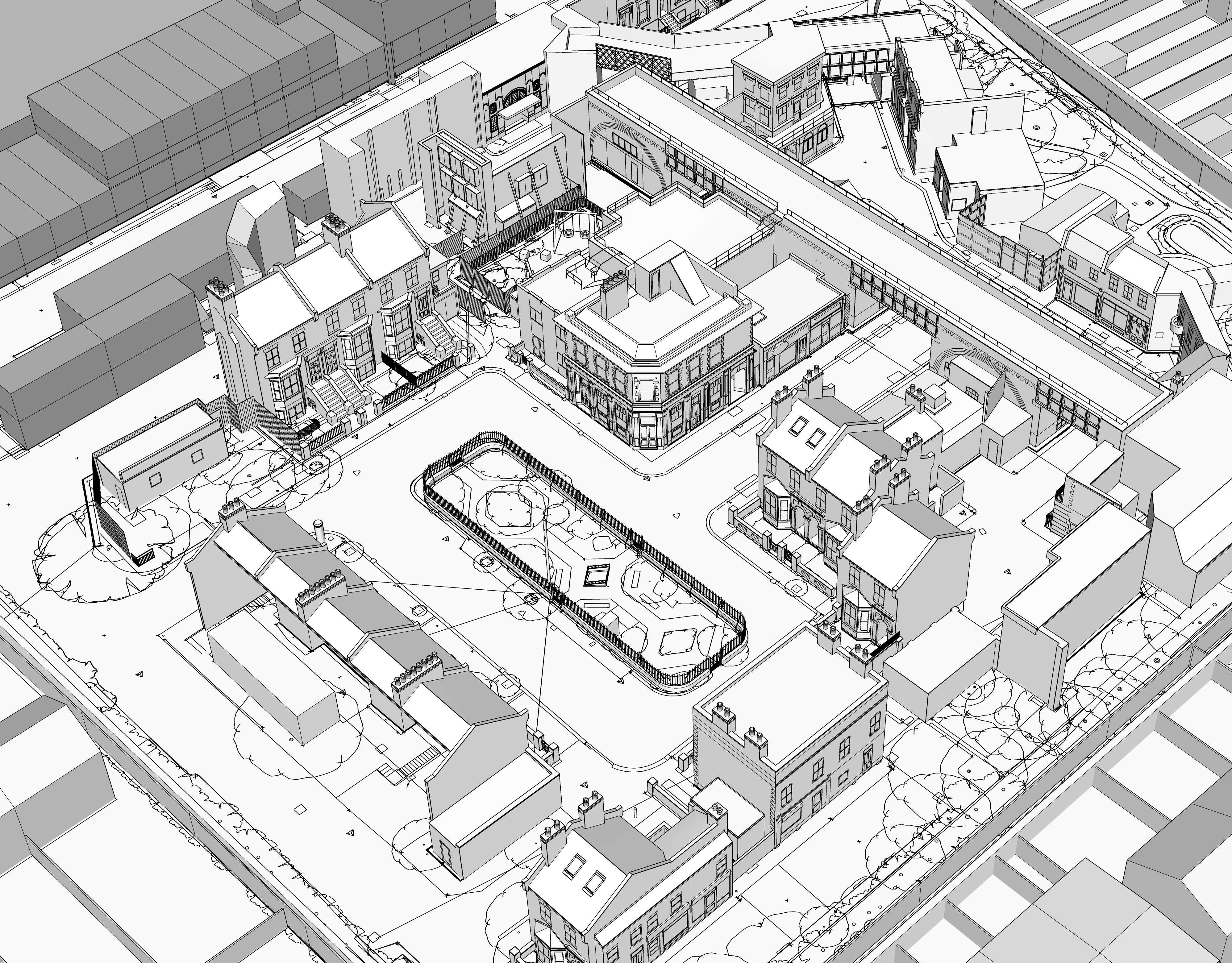
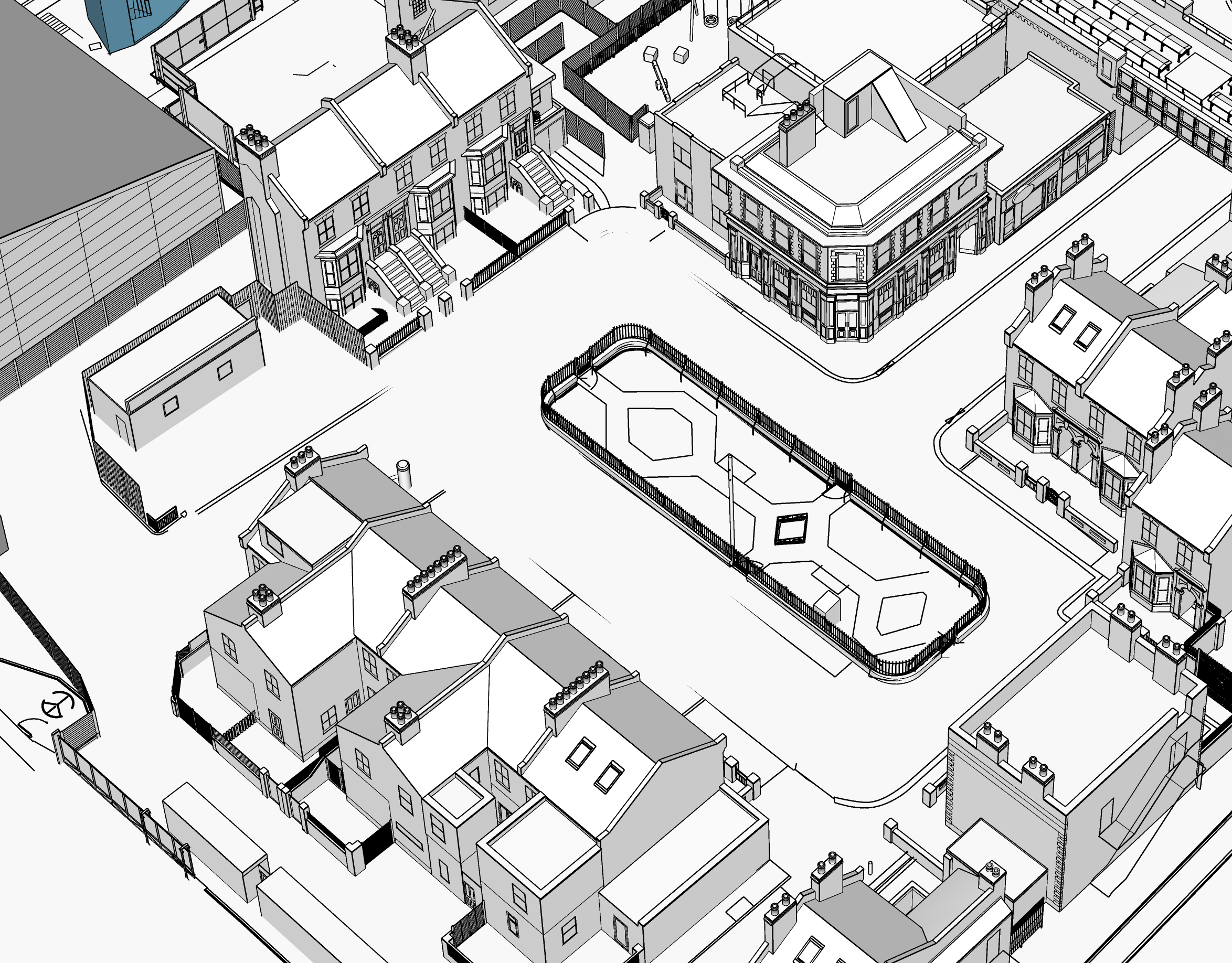
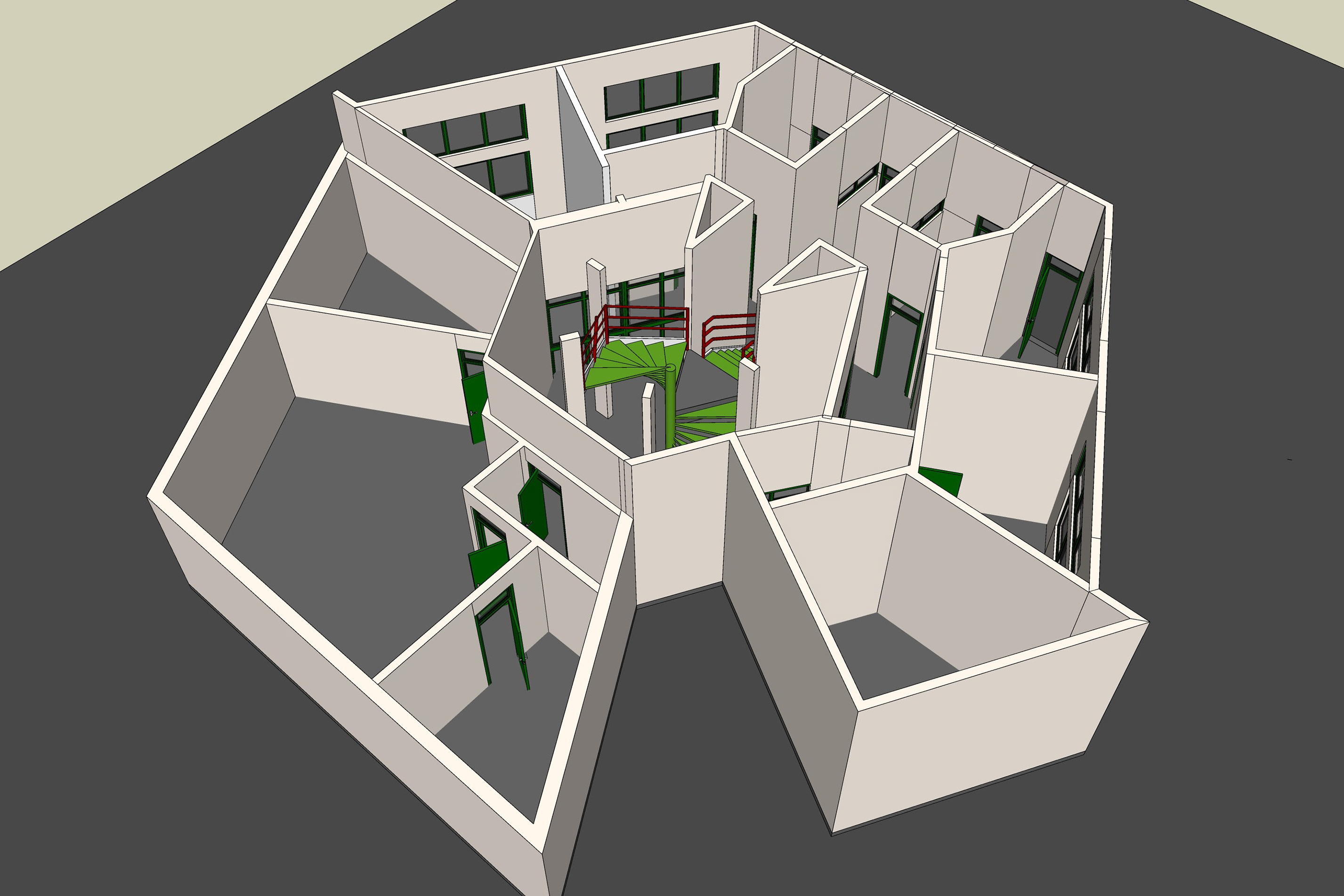
Before the detailed model was developed, this rough white model was used to establish the semi‑final building shells and test their placement within the Back Lot. It also played a key role in reviewing sightlines and assessing potential camera positions, ensuring the layout supported both practical filming needs and the overall visual flow of the space.
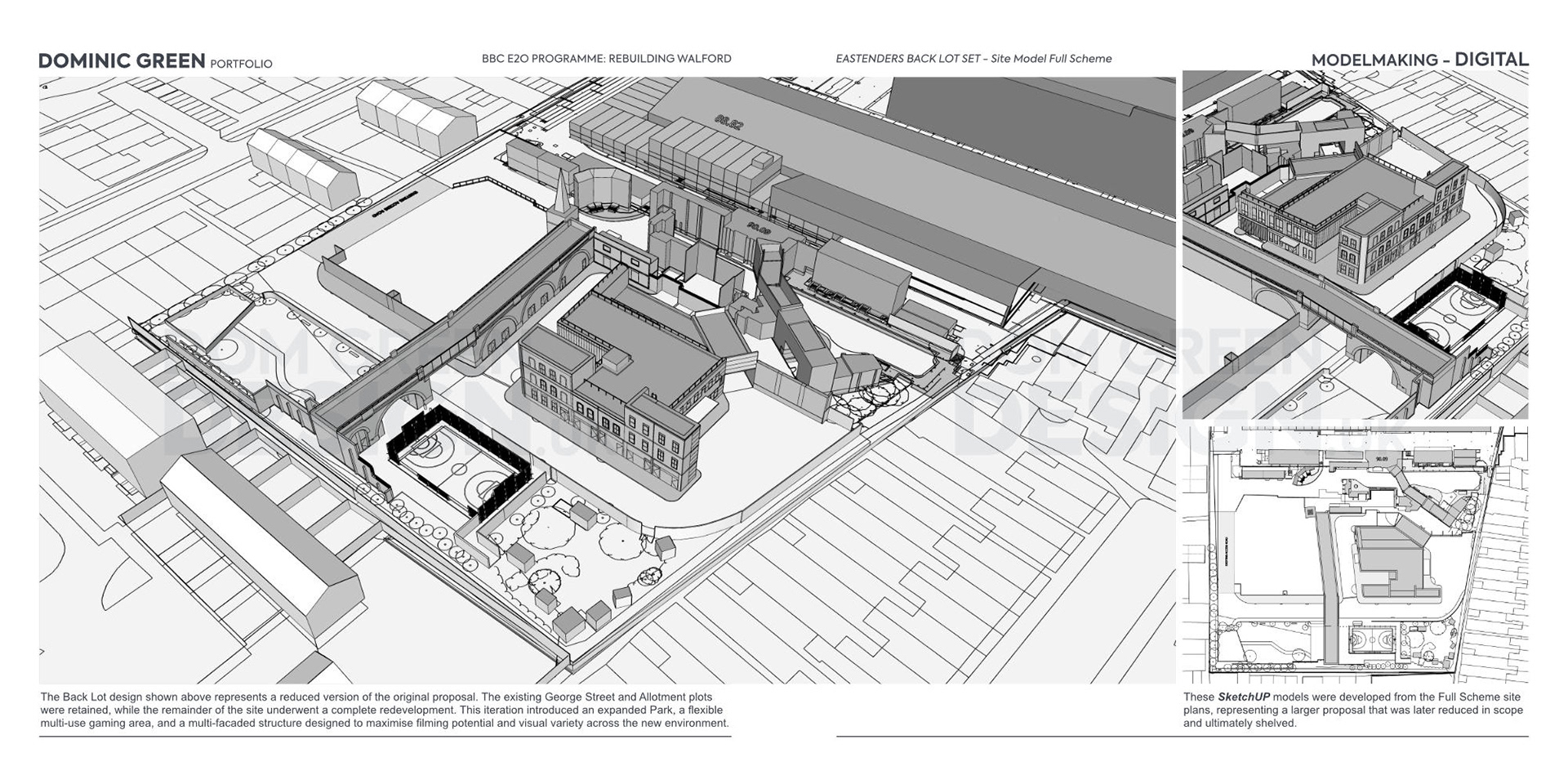
The Back Lot design shown above represents a reduced version of the original proposal. The existing George Street and Allotment plots were retained, while the remainder of the site underwent a complete redevelopment. This iteration introduced an expanded Park, a flexible multi‑use gaming area, and a multi‑facaded structure designed to maximise filming potential and visual variety across the new environment.